The Strategy Team, Ltd.
614.447.8844
3805 North High Street, Suite 202
Columbus, OH 43214
“You’re standing on twenty five years of history here.” Sounds pretty momentous, huh? That’s what John Remy from SWACO told us yesterday when Dr. Kristel and I had the pleasure of a small group tour of the Franklin County Sanitary Landfill. As part of an upcoming public affairs project we were briefed on how the Landfill runs and what it takes to keep it running.
There’s a surprising amount of activity on the landfill, and not just the constant parade of trucks coming and going to deposit trash. The landfill is engineered, meaning it’s carefully planned to keep it from either falling in on itself or catching fire. About 50 people and giant hulks of machinery are used to deliver the trash from transfer stations via semi. This semi was driving onto the “tipper” when we visited:
And to compress the trash once it’s at the landfill:

This compactor weighs 90,000 pounds. The operators drive them over the trash constantly each day to maximize landfill space.
And to cover it at the end of each day – this is a “borrow” pit where dirt is taken from to cover the trash:
Here are my “trash fact” takeaways:
For more information about the Franklin County Sanitary Landfill, or to schedule a (FREE!) tour of the landfill for classes or community groups, visit the Solid Waste Authority of Central Ohio’s website (SWACO). A blog post the Columbus Underground also shows a video of the tipper in action.
How do we change behavior? It’s a question of interest for many, working in disciplines ranging from psychology and sociology to market research. At least one sure fire way seems to be by directly impact their wallet – either positively or negatively.
In some cases, this means paying people to do something we want them to do. For instance, the Federal Government, along with many states offer tax credits to adoptive parents, designed to encourage the adoption of harder to place infants, especially those in the foster care system.
Alternatively, we can penalize those who don’t do what we’d like – speeding tickets come to mind for me, personally. But, the interesting thing is that the benefits or costs don’t always have to be very dramatic – consider the results from Washington D.C. where a bag tax has been levied on the use of plastic grocery bags. Essentially, this placed a price on a previously free good. The cost? 5 cents per bag. Not going to break the back, yet the USA Today quotes a WSJ report that suggests that bag use is down 60%.
Not only are these results instructive for social marketing (a small incentive for health lifestyle or parenting choice, perhaps?) But, retailers are beginning to use them, too, particularly in the social media domain. In what may be the penultimate encouragement for procrastination, Bing gave away Farmville currency to anyone who became a facebook fan. Papa John’s did something similar – but in exchange for your fanship you got a free medium pizza. In return of course, Papa John’s and Bing hope to cut through the clutter and get direct access to customers, the holy grail in marketing these days.
One of my favorite parts of applied research is… well… its application. Back in 2003, TST helped Columbus State Community College project demand for a second college campus and determine where said campus might be located. We used GIS mapping, surveys and focus groups with students and stakeholders as well as a RDD survey of the four county area surrounding Columbus to provide CSCC with the information they needed to make a good decision. TST documented and projected enrollment trends, created demographic and lifestyle profiles of current and potential future students and highlighted potential barriers and supporting factors that could impact demand for (and construction of) a second campus.
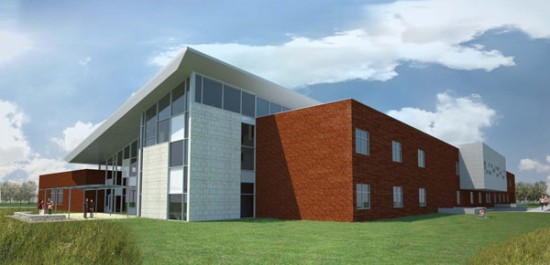
On June 28th, the ribbon cutting for the second campus (located very near one of the locations we suggested 7 years ago!) will take place. I’d like to think we helped provide the foundation for that building – pun intended.